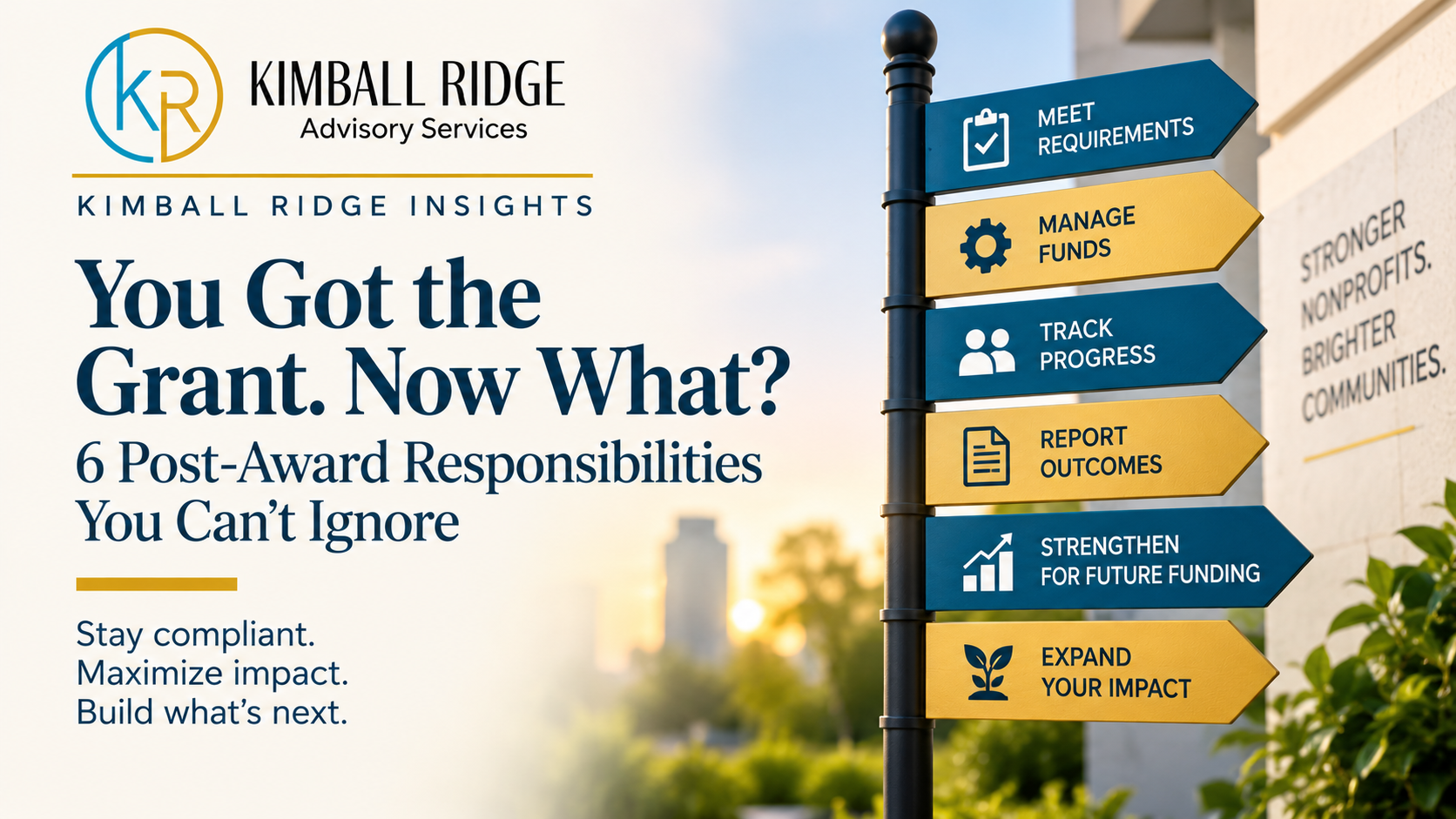
Your Nonprofit Received a Grant. Now What? 6 Post-Award Responsibilities You Can’t Ignore
The email arrives.
Congratulations! Your organization has been awarded funding.
After weeks—or months—of researching opportunities, preparing documents and submitting proposals, receiving a grant is worth celebrating.
But the work isn’t finished.
In many ways, receiving the award begins an entirely new phase of grant management.
Winning funding creates responsibilities. And how well your nonprofit manages those responsibilities can affect compliance, relationships with funders and future funding opportunities.
Here are six things your organization should address after receiving a grant.
1. Read the Grant Agreement Carefully
Before spending anything, understand exactly what your organization agreed to.
Review the award amount, approved purpose, grant period, approved budget, reporting deadlines, payment schedule and any other requirements associated with the award.
Don’t assume the final grant agreement is identical to the original application.
If something is unclear, address it before spending the funds.
2. Establish a Way to Track the Grant
Once funding arrives, your accounting system should allow you to monitor grant-related financial activity.
Leadership should be able to determine:
How much funding was received?
How much has been spent?
What was it spent on?
How much remains?
Is spending consistent with the approved purpose and budget?
If the only way to answer those questions is to search through months of bank statements, your tracking process needs improvement.
3. Communicate the Requirements Internally
Grant management isn’t solely the grant writer’s responsibility.
The people spending the money, delivering the program, recording transactions and measuring results all need to understand their responsibilities.
For example, your program director may need to collect participant data.
Your accounting team may need to track expenses separately.
Leadership may need to approve budget changes.
Someone may need to maintain receipts and supporting documentation.
And someone needs to own the reporting deadlines.
Clarify those responsibilities early.
4. Monitor the Budget Throughout the Grant Period
Don’t wait until the grant is almost over to compare actual spending with the approved budget.
Review it regularly.
If one category is significantly over or under budget, investigate why.
Maybe program participation was different than expected. Maybe costs changed. Maybe the implementation timeline shifted.
Depending on the award, some changes may require funder approval.
Regular monitoring gives you time to identify issues and determine the appropriate next step.
5. Track Outcomes Along With Expenses
Funders aren’t only interested in where the money went.
They also want to understand what happened because the money was provided.
If your proposal said you would serve 100 participants, conduct six workshops or provide 50 scholarships, your organization needs a process for collecting that information.
Don’t try to reconstruct outcomes the week before the report is due.
Financial tracking and program tracking should happen throughout the grant period.
That allows your organization to tell a much stronger story:
Here is what we received.
Here is how we used it.
Here is what we accomplished.
6. Put Reporting Deadlines on the Calendar Immediately
As soon as the grant is awarded, record every required deadline.
That may include interim reports, reimbursement requests, financial reports, program reports and final reports.
Then work backward.
If a final report is due December 15, don’t begin gathering information on December 14.
Establish internal deadlines for program information, financial reconciliation, document review and approval.
Grant reporting should be a process—not an emergency.
Good Grant Management Can Strengthen Future Funding
Organizations often focus heavily on winning grants.
But funders also pay attention to what happens after the award.
Did the organization communicate?
Did it provide reports on time?
Could it account for the funding?
Did it accomplish what it proposed?
Did it handle challenges responsibly?
A strong post-award process demonstrates that your nonprofit doesn’t simply know how to ask for money.
It knows how to steward it.
And that can make your organization a stronger funding partner over time.
The Grant Isn’t the Finish Line
Submitting the application isn’t the finish line.
Receiving the award isn’t the finish line either.
The real goal is using the funding responsibly to advance your mission—and being able to demonstrate exactly how you did it.
That’s why grant operations should include the entire funding lifecycle: readiness, application, award management, financial tracking, reporting and closeout.
Kimball Ridge Advisory Services supports nonprofits with Grant Operations & Funding Readiness, including grant readiness, proposal submission and post-award grant administration. Our goal is to help organizations build the systems necessary not only to pursue funding—but to manage it responsibly once it arrives.