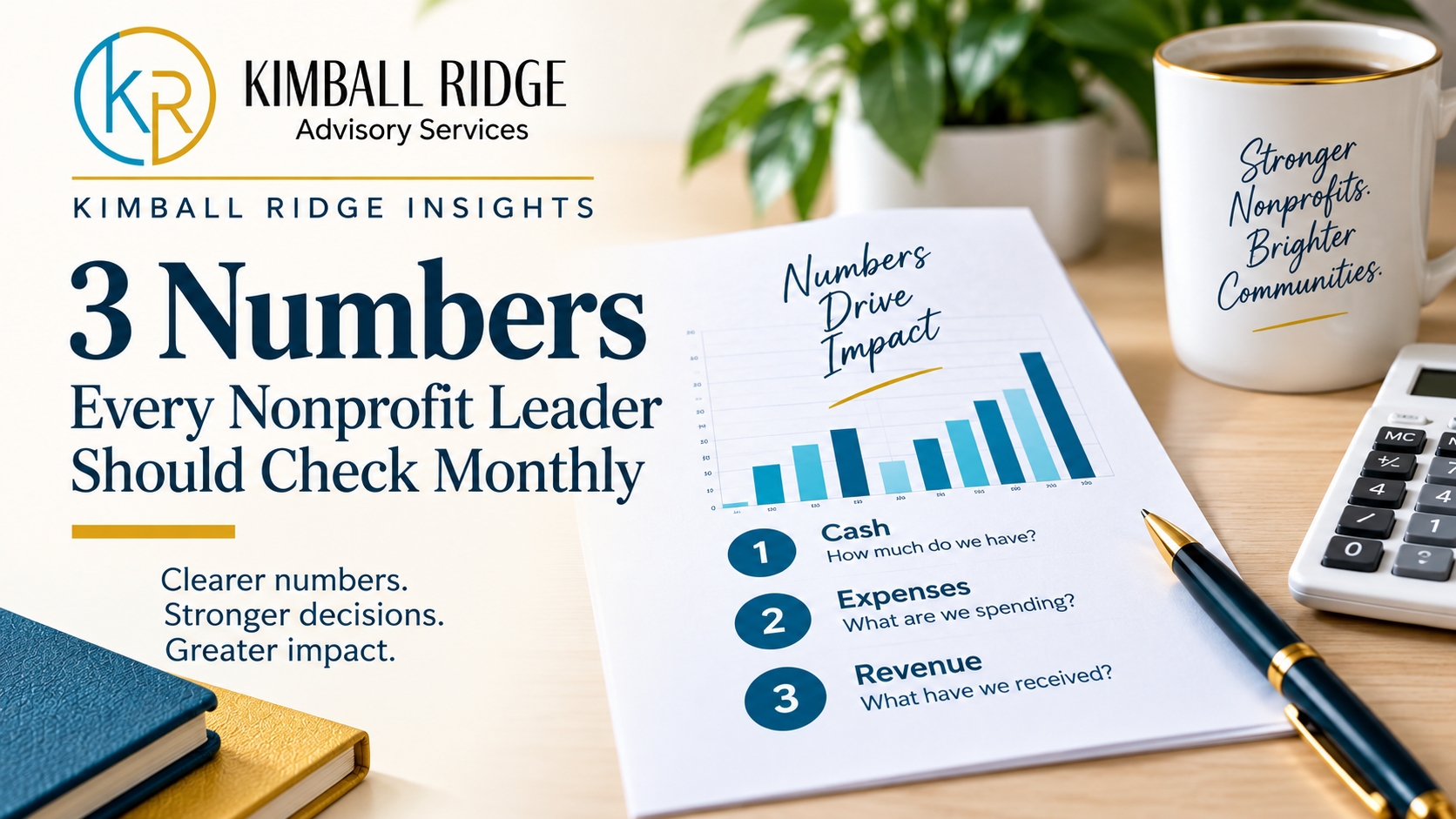
3 Numbers Every Nonprofit Leader Should Check Monthly
You don’t have to be an accountant to understand your nonprofit’s finances.
But if you’re responsible for leading an organization, there are certain numbers you shouldn’t have to wait until year-end—or until your accountant calls—to discover.
Financial reports are most valuable when leaders actually use them to make decisions.
Instead of getting overwhelmed by pages of financial information, start by establishing a simple monthly habit.
Here are three numbers every nonprofit leader should know.
1. How Much Cash Do We Actually Have?
Start with cash.
How much money is currently available in your bank accounts?
More importantly, how much of that cash is actually available for general operations?
Those aren’t always the same number.
A nonprofit could have $100,000 sitting in the bank and still face a cash-flow problem if a significant portion of that money is restricted for specific purposes.
Knowing your available cash helps you answer practical questions:
Can we make payroll?
Can we pay next month’s bills?
Can we commit to this new expense?
How long could we continue operating if expected funding were delayed?
The bank balance alone doesn’t tell the entire financial story, but it’s an important place to begin.
2. How Much Are We Spending Each Month?
Next, understand your monthly operating expenses.
How much does it cost to run your nonprofit?
Include costs such as payroll, contractors, rent, technology, insurance, program expenses, professional services and other recurring operating costs.
Then compare actual spending with your budget.
If you budgeted $15,000 for the month but spent $21,000, you need to understand why.
Maybe a planned program launched earlier than expected. Maybe insurance increased. Maybe an unexpected expense occurred. Or perhaps several small expenses have quietly started adding up.
Budget variances aren’t automatically bad.
Unexplained budget variances are the problem.
When leadership reviews expenses monthly, there is time to respond before a small issue becomes a significant financial problem.
3. How Much Revenue Have We Actually Received?
Revenue deserves the same attention.
Not promised.
Not applied for.
Not expected.
Received.
Nonprofit leaders can easily begin making plans based on anticipated money: a grant application looks promising, a sponsor expressed interest, a donor made a verbal commitment, or a fundraising campaign has an ambitious goal.
But anticipated revenue doesn’t pay today’s bills.
Track actual revenue received and compare it with the amount budgeted.
If your organization expected $150,000 by this point in the year but has received $90,000, leadership needs to know that now—not three months later.
The gap may require adjustments to fundraising, programs, spending or timing.
The Numbers Are More Powerful Together
These three numbers become even more useful when you consider them together.
Suppose your nonprofit has:
$50,000 in available operating cash.
Average monthly expenses of $20,000.
Monthly revenue averaging $15,000.
At first glance, $50,000 in the bank may feel comfortable.
But the larger picture tells you the organization is currently spending approximately $5,000 more each month than it’s bringing in.
That’s the conversation leadership needs to have.
Financial management isn’t simply about recording what happened.
It’s about using financial information to decide what should happen next.
Make Financial Review Part of Your Leadership Routine
Create a consistent monthly financial review.
At minimum, leadership should be able to answer:
How much cash do we have?
How much did we spend?
How much revenue did we receive?
How do those results compare with our budget?
Are there significant changes that need attention?
As your organization grows, your financial dashboard should grow with it. You may begin monitoring receivables, restricted funds, grant balances, fundraising performance, program costs and other indicators.
But you don’t need 20 metrics to begin managing your finances better.
Start with three.
Stronger Numbers Support a Stronger Mission
Your nonprofit’s financial information shouldn’t live exclusively with your bookkeeper, accountant or treasurer.
Leadership needs access to timely, understandable financial information to make responsible decisions.
When you know your numbers, you can identify challenges sooner, plan more confidently and steward your organization’s resources more effectively.
Strong financial systems don’t compete with your mission. They help sustain it.
If your nonprofit needs clearer financial reporting, bookkeeping or financial advisory support, Kimball Ridge Advisory Services helps nonprofit leaders build financial systems that support informed decision-making and long-term sustainability.